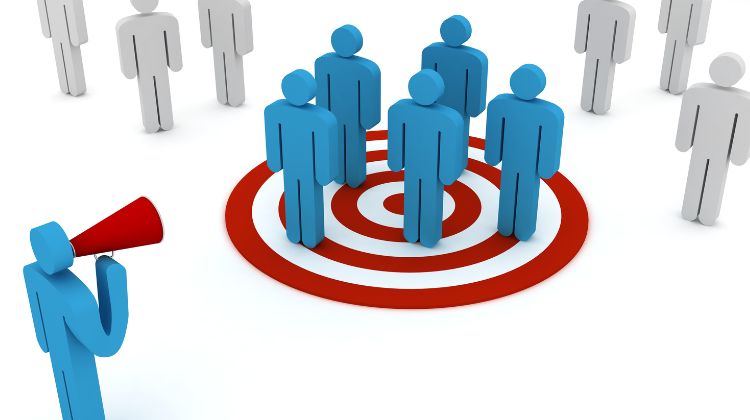
Ever feel like your marketing budget just disappears?
You’re running ads “to everyone,” posting on every social platform, and getting almost nothing back in sales.
You’re not alone—most South African SMEs start with this “spray and pray” method, and it’s a fast way to burn cash without seeing growth.
The truth is, trying to talk to everyone means your message resonates with no one.
Your generic ads get lost in the noise, failing to connect with your target audience—the very people who would love your product.
The solution is a powerful shift in strategy.
This guide will show you how to move from wasteful broadcasting to precise, profitable target marketing strategies.
We’ll walk you through defining your perfect customer and implementing the exact targeting strategies in marketing that turn curious scrollers into loyal customers.
Why “Spray and Pray” is Killing Your SA Business
The desire to reach as many people as possible is understandable. With a new business, you want everyone to know your name.

However, for South African SMEs working with tight budgets, this “spray and pray” approach is not just ineffective—it’s actively harmful.
It’s like trying to fill a swimming pool with a hosepipe in a windstorm; most of the water (your money and effort) goes anywhere but where you need it.
Let’s break down exactly why this broad-brush method is a silent profit-killer.
Step 1 – Building Your “Customer Avatar”: Who Are You Actually Talking To?
The most powerful shift in your target marketing strategies begins not with an ad, but with a person.
Before you spend another rand, you need to move from the vague idea of a “target audience” to a crystal-clear picture of your ideal customer—your “Customer Avatar.”
This is a semi-fictional representation of your perfect client, based on real data and research.
Without this avatar, your targeting is just a guess.
From “People” to a “Person”: The Power of Specificity
Think about it: it’s impossible to craft a message that deeply resonates with “everyone.”
But you can write a message that feels like it was made just for “Lerato, the Durban caterer,” or “Sipho, the Polokwane mechanic.”
This specificity is your superpower.
Your target audience stops being a demographic checkbox and becomes a human being with a name, a story, and specific problems you can solve.
The Avatar Interview: The Questions That Unlock Clarity
To build your avatar, you need to conduct a deep interview—even if it’s with yourself, using your knowledge of your best past customers.
Answer these questions in as much detail as possible:
- Demographics & Geography: Where do they live and work? What’s their job role? (e.g., “Lerato, 38. Owner of ‘Taste of Durban’ catering. Lives in Morningside, runs her business from a home kitchen.”)
- Goals & Daily Aspirations: What are they trying to achieve in their business and life? (e.g., “Wants to systematise her quoting and invoicing to free up 10 hours a week for recipe development and family time.”)
- Pain Points & Frustrations: What are their biggest daily headaches? What keeps them up at night? (e.g., “Spends hours manually creating proposals, often makes calculation errors. Chases clients for late payments, which hurts her cash flow.”)
- Values & Media Diet: Where do they go for information and trust? (e.g., “Active in the ‘SA Women in Business’ Facebook group. Listens to ‘The Casual Capitalist’ podcast. Reads ‘Entrepreneur’ SA online.”)
Putting Your Data to Work
Your instincts are a great start, but data makes your avatar bulletproof.
This is where your investment in Google Analytics 4 (GA4) pays off. Dive into the Demographics and Interests reports.
Who is already visiting your site? What are their ages, locations, and affinities?
This real-world data helps you validate and refine your avatar, ensuring your targeting strategies in marketing are built on facts, not just feelings.
For instance, if you thought your avatar was a young startup founder but GA4 shows your most engaged users are established business owners in their 40s, that’s a critical insight to adjust your focus.
By the end of this step, you should have a one-page document that brings your Customer Avatar to life.
This document becomes your north star for every marketing decision you make next.
Step 2 – The “Sniper Scope”: Applying Your Targeting Strategies in Marketing
Now that you have a vivid picture of your Customer Avatar, it’s time to aim.
This step is about applying the targeting strategies in marketing that ensure your message lands directly with that person, not the crowd around them.

Think of your avatar as the target and these strategies as the precision scope on your rifle.
Channel Selection: Fish Where Your Avatar Swims
Your first strategic decision is where to engage.
Using the “Media Diet” from your avatar, choose one or two primary channels where they are most active and receptive.
If your avatar is “Lerato the Caterer,” who is active in Facebook business groups and listens to entrepreneurship podcasts, your focus should be there—not on creating trendy TikTok dances.
This focused approach is a core target marketing strategy that prevents wasted effort.
- For B2B Avatars (like business owners): Prioritise LinkedIn for professional content and Facebook in specific industry or local business groups.
- For B2C Avatars focused on lifestyle: Instagram and Facebook with strong visual storytelling often work best.
- For Avatars actively searching for solutions: Google Search Ads are non-negotiable to catch them at the moment of intent.
Crafting the Irresistible, Avatar-Led Message
This is where your deep avatar work transforms your marketing from generic to magnetic.
Your message should speak directly to their identity, goals, and, most importantly, their pains.
- Use Their Language: Incorporate the words and phrases they use. If Lerato calls it “chasing invoices,” your ad should use that exact term, not “accounts receivable management.”
- Lead with Their Pain Point: Your headline should immediately identify the problem they feel every day. A weak, generic message says, “Great Accounting Software.” A sniper-focused message says: “Tired of Chasing Invoices? Get Back to the Kitchen with Time-Saving Software for Caterers.” This speaks directly to her frustration and her goal.
- Offer Their Solution: Your product’s features become the benefits that solve their specific problem. “Automated invoicing” becomes “Stop typing out every quote by hand and get paid faster.”
Platform Targeting in Action: From Theory to Clicks
With your channel and message set, here’s how to apply precise targeting strategies in marketing on the platforms themselves:
On Facebook & Instagram Ads
- Use Detailed Targeting to layer interests (e.g., other business software pages, entrepreneurship influencers) with job titles (e.g., “business owner,” “caterer”).
- Create Lookalike Audiences based on your existing website customers or email list. This tells Facebook to find new people who closely resemble your best current clients—a powerful target marketing strategy.
On Google Ads
- Focus on keyword intent. Bid on phrases your avatar would search for when they have the problem, like “easy invoicing software for small catering business” or “how to track catering expenses.”
- Use remarketing to show ads to people who have already visited your website—they’ve already raised their hand as interested.
In Your Email Marketing
- Segment your list based on behaviour. Send different messages to those who downloaded your “Catering Budget Template” versus those who bought your spices. This is direct audience targeting at its most effective.
By ensuring every element of your campaign—the platform, the message, and the technical targeting—is filtered through the lens of your Customer Avatar, you execute a true sniper-focused strategy.
You’re not just hoping for results; you’re engineering them by speaking directly to the person most likely to say “yes.”
Step 3 – Measuring Your Shot: Did You Hit the Target?
Executing your target marketing strategies is only half the battle. The final, critical step is to measure the results.

Without this, you’re still in the dark.
This is where you move from spending to investing, using data to confirm if your focused aim hit the mark.
For SMEs in South Africa, this discipline turns marketing from a cost into a measurable growth lever.
The Right Metrics: Beyond Vanity
Forget about likes and shares.
After implementing a precise targeting strategy in marketing, you must track metrics that reflect real business impact.
Vanity metrics tell you if people looked; business metrics tell you if they bought.
- Cost-Per-Lead (CPL): How much did you spend to get each quote request or sign-up? A lower CPL means your audience targeting is efficient.
- Click-Through Rate (CTR): What percentage of people who saw your ad actually clicked? A high CTR means your avatar-based message is compelling.
- Conversion Rate: Of those who clicked, how many took the desired action (purchased, called, downloaded)? This proves your entire funnel—from target audience to offer—is working.
- Return on Ad Spend (ROAS): The ultimate measure. For every rand you spent, how many rands did you make back? This is the final verdict on your target marketing strategy’s profitability.
The Cycle of Refinement
Measurement is not a report card; it’s a feedback loop.
These metrics provide clear signals to refine your approach.
- High CTR but Low Conversions? Your message is attracting the right clicks, but your landing page or offer might be off. Revisit Step 2’s messaging.
- High CPL? Your targeting strategies in marketing might still be too broad or on the wrong platform. Revisit your channel choice in Step 2.
- Low CTR? Your message isn’t resonating with your defined target audience. It’s time to revisit and sharpen your Customer Avatar from Step 1.
This process of launch, measure, and learn transforms your strategy from a static plan into a living system.
By continuously measuring against these goals, you ensure your target marketing strategies become more precise, efficient, and profitable with every campaign you run.